Screenshot 2026-09-07 at 12.53.04

Weekly Cyber Radar

31st August - 6th September 2026

Five stories about exposure that was already in place: retired logins, single suppliers, and patching that cannot keep pace with AI-scale discovery.

Subscribe to receive the weekly highlights and scroll down to explore this week's stories.

Subscribe to Cyber Radar

Airport Data Leaked After Ransom Refused

Screenshot 2026-09-07 at 12.46.54
What happened

Refusing to pay did not stop publication: half a terabyte on 8.7 million airport customers is now public.

Insider Intel

Entry is claimed to have come via admin keys left in public website code.

What to do now

Check what customer data your public-facing booking and parking services hold, and who can reach it.

FCA Warns Of AI Vulnerability Bottlenecks

Screenshot 2026-09-07 at 12-11-37
What happened

The regulator says AI is finding flaws faster than firms can fix them, straining remediation teams.

Insider Intel

Watch for low-rated flaws being chained into a single workable route in.

What to do now

Ask whether your patching pipeline could absorb a step change in volume without breaking change control.

NHS Email Concentrated On One Supplier

Screenshot 2026-09-07 at 12.12.38
What happened

165 of 213 English NHS trusts connect to a US hyperscaler, and 132 route email through Microsoft 365.

Insider Intel

162 of 213 trusts sit across UK and US-held services at the same time.

What to do now

Map the suppliers carrying your email, identity and core operations, and plan for a day without each.

Legacy Login Opens Dropbox Accounts

Screenshot 2026-09-07 at 12.13.32
What happened

A retired Lenovo sign-in route let attackers into about 5,000 Dropbox accounts, none using two-step login.

Insider Intel

The access ran from 4 to 21 August before anyone spotted it.

What to do now

Retire dormant sign-in integrations and make multi-factor authentication the default on shared storage.

French Hospital Fined Over Access Failures

Screenshot 2026-09-07 at 12.14.45
What happened

France's regulator fined a private hospital 500,000 euros after data on 727,000 people was taken.

Insider Intel

External clinicians could reach patient records with no extra checks at all.

What to do now

Confirm external and third-party accounts require multi-factor authentication, and that access is logged.

Three priorities for leaders

Close the access routes you forgot

List every integration, admin key and external account created for a reason that no longer applies, then close each one or bring it under multi-factor authentication.

Know which suppliers you cannot lose

Identify the few providers carrying your email, identity and core operations, and write down what the business actually does on a day without each of them.

Fix by impact, not by severity score

Prioritise remediation using exploitable paths and business service impact, and test whether your change process could absorb a sudden surge in urgent patching.

The Cyber Security Compliance Experts

RightCue has delivered cyber security compliance and assurance since 2009. We are an NCSC Assured Service Provider, CREST accredited, and a Government Commercial Agency supplier.  We work across Defence, Healthcare, Financial Services and Technology, helping organisations meet today’s regulatory requirements and prepare for what comes next.

Stay informed beyond the Cyber Radar briefing

How The UK’s Recent Cabinet Changes Could Impact Cybersecurity

RightCue named one of a small group of UK firms assured under NCSC’s Audit and Review scheme

RightCue has become an Assured Service Provider under the National Cyber Security Centre’s (NCSC) Assured Cyber Security Consultancy (ACSC) scheme, in the Audit and Review offering, starting 17th August 2026.
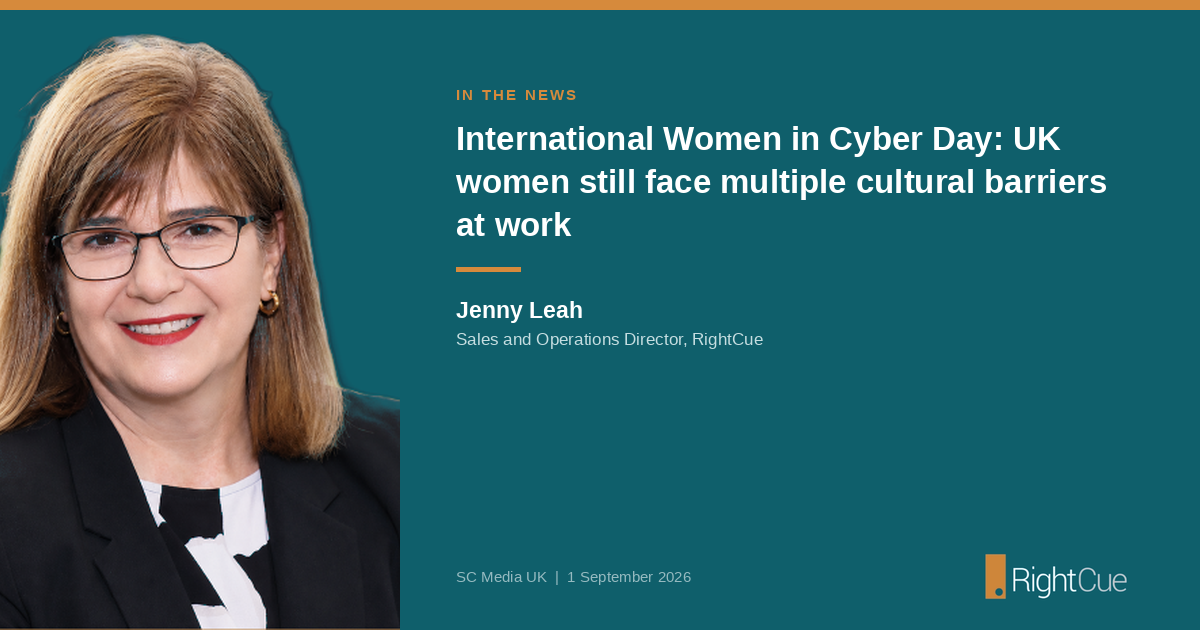
 

Jenny Leah in the news

Jenny Leah on the cultural barriers still facing women in cyber security

RightCue's sales and operations director, Jenny Leah, features in SC Media UK's coverage of International Women in Cyber Day, alongside senior women from across the industry. The piece examines why women still hold just 17% of UK cyber security roles, and why the harder question is not how many women join the profession, but how many feel able to stay.